
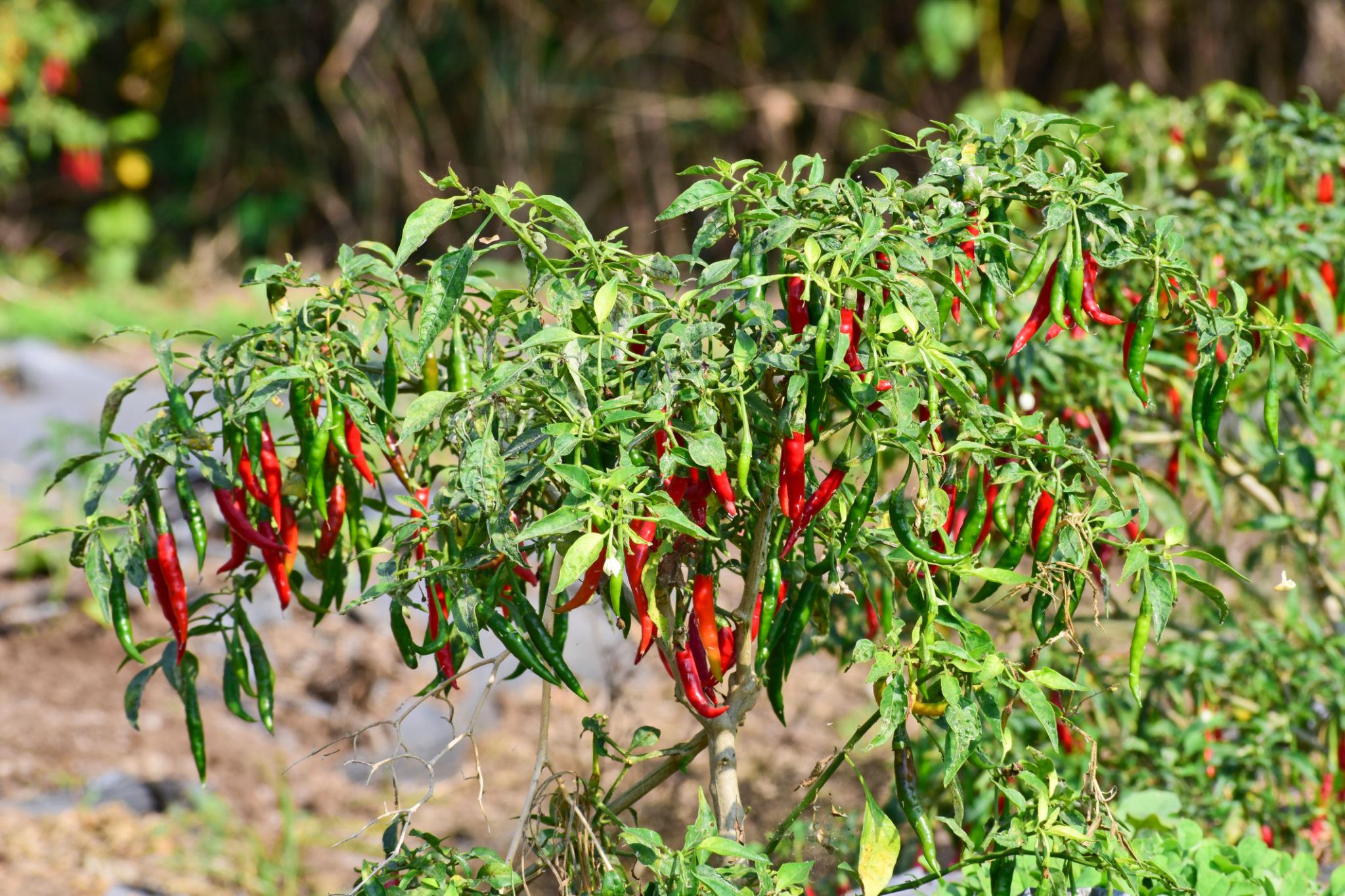
Chilli is one of the most important commercial vegetable and spice crops cultivated across India. Achieving high yield and quality depends on effective management of pests and diseases throughout the crop cycle. Early identification and timely intervention can significantly reduce yield losses and improve profitability.
Common Pests of Chilli and Their Management


7
1. Thrips
Scientific Name: Scirtothrips dorsalis
Symptoms:
- Curling and upward folding of leaves
- Silvery streaks on leaves
- Stunted plant growth
- Flower dropping and reduced fruit set
Management:
- Install blue sticky traps (10-12 per acre).
- Remove and destroy heavily infested plant parts.
- Encourage natural predators such as ladybird beetles.
- Maintain field sanitation and avoid excessive nitrogen application.
- Monitor fields regularly and adopt integrated pest management (IPM) practices.
2. Aphids
Scientific Name: Aphis gossypii
Symptoms:
- Sap sucking causes leaf curling and yellowing.
- Sticky honeydew deposits on leaves.
- Development of black sooty mould.
- Transmission of viral diseases.
Management:
- Install yellow sticky traps.
- Remove weed hosts around the field.
- Encourage beneficial insects like lacewings and ladybird beetles.
- Ensure proper crop spacing for better aeration.
3. Whiteflies
Scientific Name: Bemisia tabaci
Symptoms:
- Yellowing and curling of leaves
- Reduced plant vigour
- Honeydew secretion leading to sooty mould
- Transmission of viral diseases, especially leaf curl disease
Management:
- Use yellow sticky traps for monitoring.
- Remove infected plants immediately.
- Maintain weed-free fields.
- Adopt crop rotation and avoid continuous chilli cultivation.
4. Fruit Borer
Scientific Name: Helicoverpa armigera
Symptoms:
- Circular holes on fruits
- Feeding damage inside fruits
- Premature fruit drop
- Reduced marketable yield
Management:
- Collect and destroy damaged fruits.
- Install pheromone traps for monitoring.
- Encourage biological control agents.
- Practice timely harvesting and field sanitation.
Common Diseases of Chilli and Their Management


4
1. Chilli Leaf Curl Disease
Caused by: Chilli leaf curl disease
Symptoms:
- Upward curling and puckering of leaves
- Stunted growth
- Reduced flowering and fruiting
- Severe yield reduction
Management:
- Use healthy and disease-free seedlings.
- Remove infected plants promptly.
- Control whitefly populations, the primary vector.
- Maintain field hygiene and remove alternate hosts.
2. Anthracnose (Fruit Rot/Dieback)
Caused by: Anthracnose
Symptoms:
- Sunken circular lesions on fruits
- Black spots and fruit rotting
- Drying of twigs and branches
Management:
- Use disease-free seeds.
- Avoid overhead irrigation.
- Ensure proper field drainage.
- Remove infected fruits and crop residues.
3. Powdery Mildew
Caused by: Powdery mildew
Symptoms:
- White powdery growth on leaves
- Yellowing and premature leaf fall
- Reduced photosynthesis and yield
Management:
- Maintain proper plant spacing.
- Improve air circulation within the crop canopy.
- Avoid excessive nitrogen application.
- Remove infected leaves to reduce disease spread.
4. Damping-Off
Caused by: Soil-borne fungi.
Symptoms:
- Seedling collapse near soil level
- Poor germination
- Sudden wilting and death of seedlings
Management:
- Use well-drained nursery beds.
- Avoid overwatering.
- Use healthy seeds and raised nursery beds.
- Maintain nursery sanitation and proper drainage.
Integrated Management Practices for Healthy Chilli Crop
✅ Use certified, high-quality seeds.
✅ Follow crop rotation and avoid continuous chilli cultivation.
✅ Maintain field sanitation and remove weeds regularly.
✅ Monitor crops frequently for early detection of pests and diseases.
✅ Install sticky and pheromone traps for pest surveillance.
✅ Ensure balanced nutrition and proper irrigation management.
✅ Encourage beneficial insects and adopt integrated pest management (IPM).
Conclusion
Pests and diseases can significantly impact chilli productivity and fruit quality if not managed timely. Regular field scouting, preventive measures, and integrated management practices help farmers minimize losses and achieve higher yields. A healthy crop begins with quality seed, good agronomic practices, and early intervention against pest and disease incidences.
Karoda Seeds is committed to supporting farmers with high-performing, disease tolerant chilli hybrids and practical crop advisory to help maximize productivity and profitability. 🌶️🌱